
Explore Related Nursing Specialties



Acute Care Nurse Job and Degree Guide
Acute Care Nursing Career Snapshot
Where you’ll work: Medical-surgical, cardiology, pediatric and other units in hospitals.
What you’ll do: Provide care to patients that have brief but severe medical needs, such as a sudden illness or recovering from a major surgery or injury.
Minimum degree required: ASN or BSN, though many employers prefer or require nurses to have a BSN or higher.
Who it’s a good fit for: Acute care can be unpredictable, which makes this job anything but routine. Acute care nurses should be flexible and be able to stay calm under pressure.
Job perks: Acute care can encompass many different specialties (such as pediatric or cardiac acute care) so there is plenty of variety and options to mold your career to your particular interests.
Opportunities if you pursue a higher degree or certification: Acute care nurses who choose to specialize or pursue their APRN license may have more job opportunities available to them and the chance to earn a higher salary.
Median annual salary: $93,600
What Is an Acute Care Nurse?
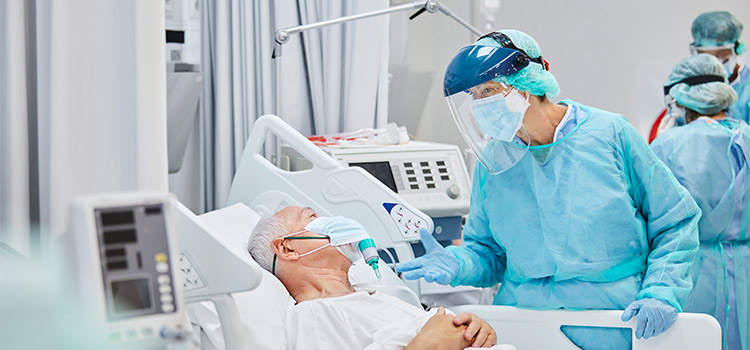
An acute care nurse is highly trained and experienced in caring for patients with immediate and serious medical needs arising from a range of situations, including sudden illness, recovery from surgery, injuries, and the management of complex medical conditions.
In this Article
Job Description | How to Become an Acute Care Nurse | Where You’ll Work | Salary | Career Outlook | Career Insight | Professional Resources
Acute care nurses have multiple options for career advancement. Many choose to specialize in specific areas like pediatrics or cardiac care, while others ultimately earn their advanced practice registered nurse (APRN) license.
As an APRN, nurses can take on leadership roles as a clinical nurse specialist (CNS) or provide primary care as a nurse practitioner (NP).
Competition is intense for acute care nursing jobs, according to former nurse Beth Hawkes, MSN, RN-BC, an author, columnist, and nursing professional development specialist. “It’s not easy landing your first job in acute care; persistence is how you do it,” she says. “Be willing to work in any specialty that’s hiring to get your foot in the door.”
What Do Acute Care Nurses Do?
The job is challenging and anything but routine, often requiring rapid intervention and quick decisions. It is also one of the most in-demand jobs in nursing, due to the growth of an aging, active population with chronic conditions and a shortage of nurses throughout the healthcare system.
Acute care nurses work in both direct and indirect patient care roles. In direct patient care roles, you may perform many of the following tasks:
Acute care nurses are also employed in indirect patient care roles, such as:
Learn How to Become an Acute Care Nurse
Acute care nurses are licensed registered nurses (RNs) who have a college degree, a minimum of two to three years of nursing experience, and specialty certifications. Licensing requirements, required education, and scope of practice are determined by each state. As you plan for the future, check on the specific requirements of the state in which you plan to practice.
Generally, employers require entry-level acute care nurses hold at least an Associate Degree in Nursing (ADN), but top employers such as major hospitals and health organizations generally require or strongly prefer a Bachelor of Science in Nursing (BSN) degree. Supervisory, training, and leadership positions will generally require at least a BSN, with most employers indicating a strong preference for a Master of Science in Nursing (MSN) or even a Doctor of Nursing Practice (DNP).
Larger employers will generally look for acute care nurses with a Bachelor of Science in Nursing degree.
Education programs generally include classroom studies, clinical training, and externships. Additional coursework may be required for specialty certifications. Continuing education is generally required to maintain licensure in all states, as well as to renew specialty certifications.
“For nurses, continuing education is a lifestyle,” Hawkes says. “It’s designed to keep nurses up to date in their practice and abreast of current trends and guidelines.”
What Degree Do I Need to Become an Acute Care Nurse Practitioner?
Rules may be changing for those looking to earn their APRN license and become a CNS or NP specializing in acute care. While a master’s is the minimum degree required currently, some industry organizations are advocating for a DNP to become the entry-level degree for both jobs.
Licenses
The cornerstone of your nursing credentials will be your RN license (or an APRN license if you’re planning on a managerial or supervisory role). In the U.S., nurses need to be authorized to practice by a state board of nursing, and licensure requirements can vary by state.
At a minimum, you’ll need to earn an RN credential by passing the NCLEX examination after earning a degree in nursing. License, education, and certification requirements vary by state, so be sure to verify the requirements for the state in which you plan to practice.
Acute Nursing Certifications
Depending on your career plans, the types of patients you care for, and where you choose to work, specialty certifications may or may not be state-mandated. For many acute care positions, however, such certifications may be preferred or required by employers, and having one—or even two or three—may help you land a job or a more senior position in acute care.
There are a wide variety of specialty certifications available to acute care nurses at both the RN and APRN levels:
What’s the Difference Between an Acute Care Nurse and a Critical Care Nurse?
The primary difference is that critical care requires a much higher level of intensity in assessing, monitoring and treating patients, according to Nicole Kupchik, MN, RN, CCNS, CCRN, PCCN-K, who is a critical care clinical nurse specialist. “A natural career transition for many nurses is to move from acute care to critical care.”
Both acute care and critical care nurses:
Where Acute Care Nurses Work
Acute care nurses work in a wide range of facilities. Employers include:
Within a facility, depending on your experience, training, and specialty, you may work in units and departments such as:
In moments of crisis and in smaller or remote facilities, experienced acute care nurses who are not certified or trained as critical care nurses may also be assigned to work in emergency rooms and ICUs.
Acute Care Nurse Salary
What you earn as an acute care nurse or APRN will vary depending on your position, education, and experience. Where you live and where you work will be factors as well.
The U.S. Bureau of Labor Statistics (BLS) does not break out the median salary for acute care nurses specifically, but it does list the median annual wage for a registered nurse: $93,600.
The BLS does not break out the median salary for acute care nurses specifically, but it does list median annual wage for RNs.
The BLS also reports that the median salary for APRNs who are NPs is $129,210.
Employers looking for acute care RNs and APRNs often stipulate that specialty certifications are strongly preferred or required for employment. Those with strong educational backgrounds and specialty certifications may find it easier to land those highly coveted positions in acute care.
Career Outlook
Several trends will drive job growth and hiring over the next 10 years for acute care RNs and APRNs.
First, the country’s population is aging, but seniors remain physically active and participate in exercise and outdoor activities at much higher levels than past generations. This is causing an increase in the number of complex health issues that require care and management, and the nation needs more primary care providers to meet patient needs.
An aging population and senior citizens remaining active later in life are causing an increase in the number of complex health issues that require care and management.
APRNs can help address this need in many states, as they are licensed to diagnose and prescribe medication, either working with physicians or as independent providers. The BLS projects job growth for NP’s (a subset of the APRN classification) to be a whopping 40.1% through 2034.
Second, the U.S. has been facing a direct care nursing shortage for several years now and that trend is expected to continue due to an expected increase in retirement of experienced nurses—and to cover vacancies caused by transfers of nurses to indirect care roles.
Given an aging population with complex medical issues, the need to replace retiring nurses, and the expected ongoing transfer of nurses to non-direct care roles, the actual job growth for highly trained and experienced nurses like those in acute care may actually be higher than anticipated.
Career Insight
Both Hawkes and Kupchik have been aspiring nurses. They know what it feels like to be a new nurse just starting out—or a nurse transitioning into a new practice.
In her book, The First Year Nurse, Hawkes advises students and transitioning nurses alike to anticipate “reality shock,” the reactionary process you undergo when you move from the classroom to nursing or move from one nursing practice to another.
“You discover that the job is not what you expected,” she says. “When reality shock is at its worst, you may wonder if you are on the right unit, in the right facility, or even if nursing is right for you. You may go so far as to question your decision to become a nurse.”
You are not alone; most nurses go through this. Hawkes suggests you give it a year and don’t make any quick decisions. Almost everyone comes out whole on the other side.
Kupchik says that many acute care nurses move to critical care and think they know what to expect. But the critical care role is much more intense and they underestimate the difficulty of making the transition. To assure success in a new role, Kupchik suggests the following:
You’ll be nervous for the first year. That’s normal.
Be prepared to look up medical info after your shifts.
Get certified in your current specialty; she suggests either the PCCN or the MEDSURG-BC.
Realize that the learning curve is going to be steep. Take full advantage of your orientation. Be a sponge. And remember it’s OK to say you don’t know.
In the end, both Hawkes and Kupchik agree that the first year as a nurse or as a transfer can be intense. “But it’s so worth it!” says Kupchik.
Acute Care Nurse: Is This Job Right for Me?
This job is not for inexperienced nurses—or for the faint of heart. Acute care nursing can be a high-stress, unpredictable, high-burnout job with inconsistent hours and long shifts. What type of person would do well in this role? If you are someone who loves a challenge and wants to make a difference every day, you may thrive in this job.
If so, this job may be just right for you.
Professional Resources
There are many resources available to the nursing profession. Some popular ones include: