

Community Health Nursing Career Guide (Duties, Education & Salary)
Key Takeaways
- Community health nursing focuses on individual and community health, working in various settings like public health clinics and non-profit organizations.
- To become a community health nurse, most employers require at least a BSN, and higher degrees may lead to better job opportunities and salaries.
- While there is no specific certification for entry-level community health nurses, obtaining a Certified in Public Health (CPH) credential can enhance career prospects.
Community Health Nurse Career Overview
Where you’ll work: Public health clinics, non-profit or faith organizations, hospitals or large health systems or in nursing education.
What you’ll do: Provide care to a community—especially to traditionally underserved populations.
Minimum degree required: Most community health nurses needed a BSN or higher, but some jobs may only require an ADN.
Who it’s a good fit for: Since public and community health can often be underfunded, community health nurses need to be creative with the resources they have and look at the larger picture of health and wellness. This means they may be addressing issues that are normally associated with social work, such as food insecurity, housing and more.
Job perks: Community health nurses can have a lot of autonomy since they often work alone or in small teams. These nurses also have the reward of helping some of the most vulnerable people in their community.
Opportunities if you pursue a higher degree or certification: Although there is no specific certification for public health nurses, if they have a BSN and at least five years of experience in their field, they can get Certified in Public Health (CPH) by the National Board of Public Health Examiners. This could open you up to more promotional opportunities and a higher salary.
Median annual salary: $97,550
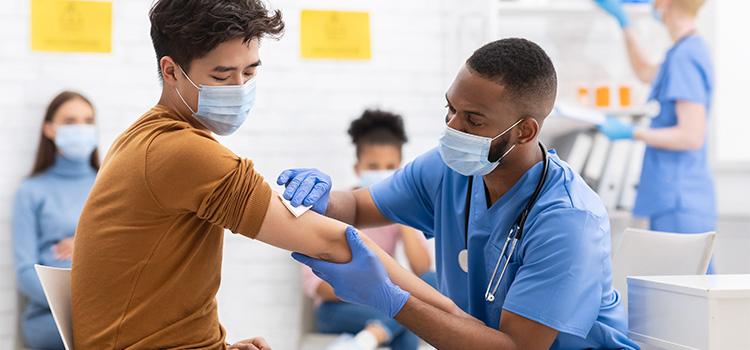
Community health nurses bring healthcare to some of the most vulnerable in their community. These nurses may do health screenings at a health fair or for a faith community. They may work in a public health clinic to help determine barriers to care in an underserved community, or for a governmental body offering outreach to communities like the homeless or migrant farmworkers.
In this Article
What is Community Health Nursing? | How to Become a Community Nurse | Job Description | Where You’ll Work| Education| Online Programs| What to Look for in a School | Licensure | Certification | Salary and Job Outlook | Professional Resources
What Is Community Health Nursing?
Community health nursing is often confused with public health nursing—even by those who have been in the profession for years. “I’ve spent the last three years working on rewriting the scope and standards of care for public health nursing, and I don’t think in all that time our group came to a consensus on definitions for both,” says Lori A. Edwards, DrPH, NPH, BSN, RN, president of the Association of Community Health Nurse Educators (ACHNE) and an assistant professor at the University of Maryland School of Nursing.
Perhaps the easiest way to separate the two is to think of public health nurses as healthcare professionals who create programs and help develop policy and community health nurses as healthcare professionals who implement those programs at the patient level. Public health nurses focus on population health, says Edwards, while community health nurses focus on individual, family, and community health.
Steps to Becoming a Community Health Nurse
Here’s a guide to pursue an education to become a community health nurse.
Decide if community nursing is right for you.
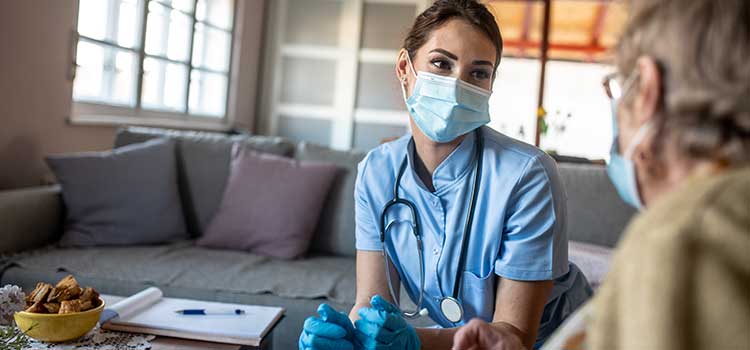
Do you like making a direct and visible difference in people’s lives? Do you enjoy working on your own initiative with minimal supervision? Can you handle working in situations where you may come up against frustrating systemic and financial roadblocks? And are you creative enough to find ways to make do with tight resources?
Determine what education you’ll need.

While some entry-level positions may be available with an Associate Degree in Nursing (ADN), for the most part, community health nurses need a bachelor’s degree, ideally a Bachelor of Science in Nursing.
Graduate from an accredited nursing program.

Your education should be from an accredited nursing program to maximize your employment opportunities.
Get licensed as a registered nurse (RN).
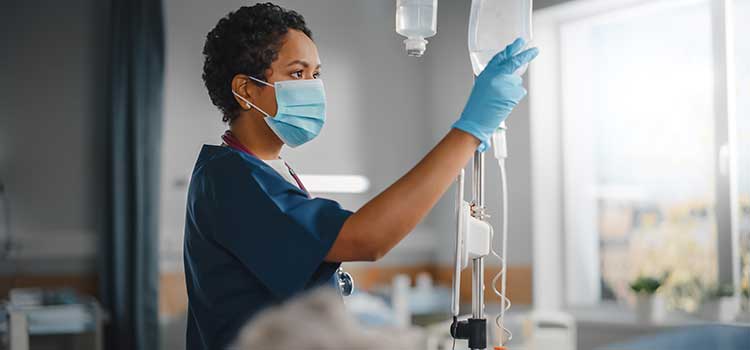
Take the National Council Licensure Exam for Registered Nurses (NCLEX-RN) to earn your RN license to practice.
Gain experience to earn a public health nursing certification.
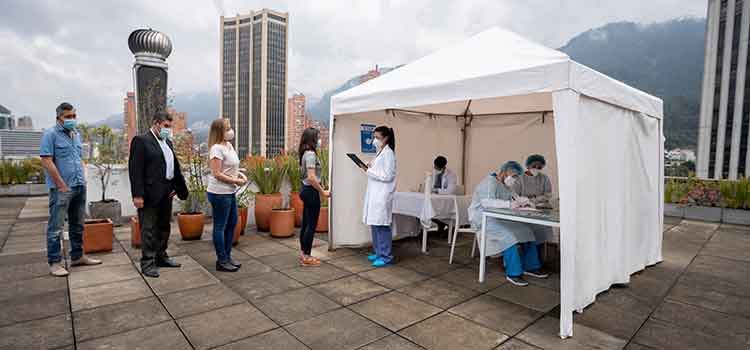
While you may be able to get work in community health nursing right out of school, having some experience in general nursing practice may increase your job prospects. And with experience in community nursing, you can earn a certification to demonstrate your expertise and knowledge.
What Do Community Health Nurses Do?
While the jobs they do can vary, community health nurses always work with people—individuals or groups—to improve health and health outcomes.
They may work with a patient recently discharged from the hospital to access healthy food, provide assistance with nutrition or daily tasks, or find rides for follow-up visits. As another example, Edwards says community nurses “may work with a faith community trying to improve the metabolic health of parishioners by doing blood sugar testing and nutrition education.”
While the jobs they do can vary, community health nurses always work with people—individuals or groups—to improve health and health outcomes.
Among the tasks you may perform as a community health nurse:
What It Takes to Be a Community Health Nurse
Community health nursing can be a rewarding career, especially if you have these traits and skills.
Where Community Health Nurses Work
Many healthcare agencies and groups work within their communities, and that means community health nurses can be found in any number of organizations:
A Day in the Life of a Community Nurse
Edwards has been a nurse for more than 40 years. During about 20 of them, she worked as a community health nurse, often in a mobile clinic providing care to migrant farm workers who wouldn’t otherwise have easy access to healthcare.
Her day might include caring for people who have illnesses like an ear infection or who need to have a medication check for high cholesterol or a blood pressure prescription.
In migrant communities, there are children who need vaccinations or care for injuries like sprains. Nutritional education, referral to other providers, and help accessing food, housing, and other needs are all elements of a day caring for migrant workers.
“You need to be concerned with whether there is a grocery store in the neighborhood or recreational opportunities for children,” Edwards says. “All of these things can impact a community’s ability to get and stay healthy. It’s a lot of work. You can start out working on one thing—a patient with diabetes—and end up working on something else, like teaching them about healthy eating, helping them find access to affordable insulin, and connecting them with a regular doctor.”
Education to Become a Community Nurse
While some community nurses have an associate degree, many employers require a bachelor’s degree. In general, the larger the community and organization in which you work, the more education you’ll need. You are more likely to get a job with an associate degree in a more rural setting.
Edwards says a bachelor’s degree can help you get higher-paying jobs. “Work to the highest-level degree you can in the field,” she says. “That is how you will become a leader. You won’t get rich, and you may get frustrated by the lack of resources, but that is the real way to make a difference.”
Eventually, she says, going for a doctorate and teaching at the university level could afford you the best of both worlds. A PhD could allow you to keep the regular hours of a teacher while still participating in community health through the hands-on programs your students take part in.
Associate Degree in Nursing (ADN)
Bachelor of Science in Nursing (BSN)
Online Community Health Nursing Programs
You can find programs that are at least partly online—with coursework online and labs and clinical hours in person. These programs require more self-direction, organization, and discipline than programs that are entirely in person, but they may be perfect for those who have day jobs or need to fit their studies around caring for children.
You can find programs that are at least partly online—with coursework online and labs and clinical hours in person.
They could also be a good option for nurses with an ADN who want to pursue a bachelor’s while continuing to work. Online courses expanded during the pandemic, and many institutions are continuing hybrid options for all students.
What to Look for in a School
There are more than 2,600 nursing programs in the United States. Choosing the right one is a personal choice, but there are some things you should look for:
Accreditation
Accreditation will ensure that a program adheres to common standards of education and quality. In addition, you’ll have to attend an accredited program to apply for federal financial aid, and most employers look for accreditation when hiring.
Post-education services
What does a program provide in terms of job placement and career counseling? How will it help you translate your degree into a job?
How well the program prepares students
Ask about the rate of students passing the RN licensure exam on their first try, and how many students from the most recent graduating class have found nursing jobs.
Licensure
After graduation, students must pass the NCLEX-RN exam to obtain a license to practice.
The test is computerized, and each answer guides the computer program to choose subsequent questions.
Topics include:
The number of questions can range from 75 to 265 and must be answered within six hours. There are plenty of options for test preparation help. Your school may offer resources, and you’ll find others online.
Once you pass the test, you’ll be ready for licensure by your state nursing board, which may also require you to pass background and drug tests.
Certification
Currently, there is no specific certification for entry-level community health nurses or public health nurses. However, the National Board of Public Health Examiners offers the Certification in Public Health (CPH) to nurses with at least a bachelor’s degree and five years of experience in their field.
When you qualify for the CPH credential, it could be worthwhile. A certification helps you stand out in your field by demonstrating your expertise and knowledge. This may lead to promotional opportunities or higher pay.
Community Health Nurse Salary
The U.S. Bureau of Labor Statistics (BLS) reports salaries for nurses in general but doesn’t break out specialties. According to the BLS, median annual pay for nurses with a bachelor’s degree is $97,550. Take a look at salaries by state:
Nursing jobs will grow by 4.9% through 2034, the BLS says, due largely to the growing number of older Americans.
Nursing jobs will grow by 4.9% through 2034, the BLS says, due largely to the growing number of older Americans. Because baby boomers are living longer, they’re requiring more healthcare, often for chronic conditions such as diabetes and obesity.
Professional Resources
You may choose to advance your career with more education. There are also a variety of organizations that can help nurses boost their professional prospects. Many hold annual conferences or provide opportunities for continuing education. Here are a few to consider:
- Council of Public Health Nursing Organizations is a coalition of public health nursing organizations. Resources include access to online workshops related to advocacy.
- Association of Community Health Nurse Educators offers a long list of educational resources on topics like climate change, population health, and healthy communities.
- Association of Public Health Nurses provides resources for certification and policy and advocacy. It also holds conferences and other events.
- American Nurses Association is an overarching organization for nurses and a clearinghouse for a variety of nursing-related resources. It also has a robust website and a newsletter and holds conferences.