
Nurse Practitioner Career and Degree Guide
Related Reading
What is a Nurse Practitioner?
A nurse practitioner is an advanced practice registered nurse (APRN) who has earned at least a master’s degree and completed additional training in a specialty area of medicine. Because of their advanced skills, NPs have more authority to administer care compared to registered nurses. For example, NPs can prescribe medication, administer physical exams, diagnose illnesses, and provide advanced medical treatment similar to a doctor. While NPs have more authority than RNs and practice physician-level care, some states require doctors to supervise their patient care decisions.
Steps to Becoming a Nurse Practitioner
Your exact path to an NP career will depend on your personal circumstances and background. However, there are a few standard steps you’ll need to take.
Make sure the field aligns with your career aspirations.
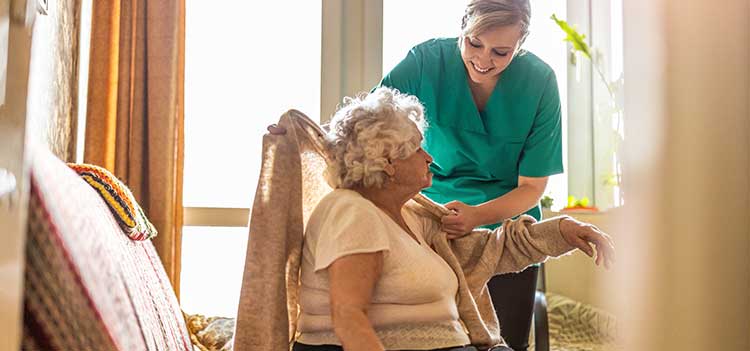
You’ll need compassion, ethics, and excellent problem-solving skills to be successful in an NP role. “Good nurse practitioners are nurses who have empathy for their patients and are willing to listen,” says Michelle Paul, RN, BSN, a content specialist for nurse staffing agency Clipboard Health. “They are also able to take charge and have great leadership skills, as many work as supervisors of other healthcare staff.”
You will also likely find yourself acting as a primary care provider, seeing patients and prescribing treatments and medications. Make sure you’re ready for this level of responsibility.
Complete an undergraduate degree program.

If you are already working as an RN and are considering advancing your career as an NP, you will have already earned either an Associate Degree in Nursing (ADN) or Bachelor of Science in Nursing (BSN). If you’re just starting out and envision a job as a NP in the future, you’ll want to be sure you pursue one of these undergraduate nursing degrees.
Earn your RN license.

You’ll need an active RN license in good standing to enter an NP program. Requirements vary, so you’ll want to make sure you check what’s required by your state. One requirement common to every state is that aspiring RNs must take and pass the National Council Licensure Examination, or NCLEX.
Gain experience.

Many graduate programs prefer aspiring students to have a certain amount of professional, clinical experience under their belts before jumping back into school. Discuss your situation with an advisor to figure out your program’s requirements.
Earn your MSN or DNP.

A Master of Science in Nursing (MSN) is the minimum degree you need to be an NP (although by 2025 the Doctor of Nursing Practice, DNP, will be the standard).
“This is currently a recommendation, but not a mandate,” explains Sara Hunt, DNP, MSN, FNP-C, PHN, a family nurse practitioner and health policy instructor. “However, there is a very strong trend of NP programs transitioning to doctoral programs and NPs with master’s (degrees) returning to school to obtain their DNP.”
You can apply to the standard MSN program if you have a BSN. Nurses with an ADN can apply to a RN-to-MSN bridge program that allows them to earn their BSN alongside their MSN. You can apply to DNP programs if you have an MSN, or you can apply for a BSN-to-DNP bridge program if you don’t already have an MSN.
Take a certification exam in your specialty.

All NP educational programs focus on a specialty, such as pediatric, acute care, geriatric, among many others. The exam you take will depend on your area of focus. Some specialties are more in-demand than others, and your salary may reflect that. Certification organizations for NPs include American Association of Nurse Practitioners Certification Program, the American Nurses Credentialing Center, the National Certification Corporation, and the Pediatric Nursing Certification Board.
Apply for licensure in your state.

You’ll need to submit your exam results, along with your transcripts, to your state for your nurse practitioner license. In some states, you’ll also need to apply for a separate prescriptive authority license that allows you to prescribe medicine.
Maintain your license through continuing education and clinical hours.

You’ll need to take steps to keep your license active. The types of classes and how often you’ll need to take them will depend on your license and your state. Generally, you’ll need a set number of continuing education hours and clinical practice hours.
Does a Nurse Practitioner Provide the Same Care as a Medical Doctor?
Working as a nurse practitioner is a distinctly nursing career, but you’ll have a lot more autonomy than an RN would. Nurse practitioners have the unique ability to treat patients and provide primary care from a nursing perspective, which, according to DeGarmo, is distinctly unique and differs from the perspective of an MD.
“(Nurses) treat the human response to the disease process,” says DeGarmo. “In medicine, they treat the disease process itself.”
NPs incorporate their nursing perspective into the care they provide. This means the care might look different from the care provided by a physician, even if they’re taking on many of the same tasks.
Job Outlook
The job of nurse practitioner is one of the fastest growing in the nation, according to the U.S. Bureau of Labor Statistics (BLS). The profession is anticipated to grow 44.5% through 2032.
“One of the things we’ve found is that people are leaving healthcare, retiring, going into something else,” says Sean DeGarmo, PhD, RN, ENP-BC, FNP-BC, ACNS-BC and director of APRN Initiatives for the American Nurses Association’s (ANA) American Nurses Credentialing Center (ANCC). “So there is a large gap.”
The number of nurse practitioners is expected to grow 44.5% by 2031.
Because of their popularity with patients and healthcare staff, NPs are much in demand—not only to help serve the patient population, but also to ease the burden on overtaxed physicians’ time and serve as a less expensive healthcare option to a medical doctor.
“Nurse practitioners can be much cheaper to employ than physicians,” says Paul, “and many NPs are already working as registered nurses and have built up the connections with other nurses and facilities to network into job openings.”
Resources
As you consider pursuing a career as an NP, check out these resources for more information.
With professional insight from:

Content Specialist, Clipboard Health

Sean DeGarmo, PhD, RN, ENP-BC, FNP-BC, ACNS-BC
Director of APRN Initiatives for the American Nurses Association’s (ANA) American Nurses Credentialing Center (ANCC)

Sara Hunt, DNP, MSN, FNP-C, PHN
Family Nurse Practitioner and Health Policy Instructor