





The rise of AI and robotics in nursing: Transforming education and patient care
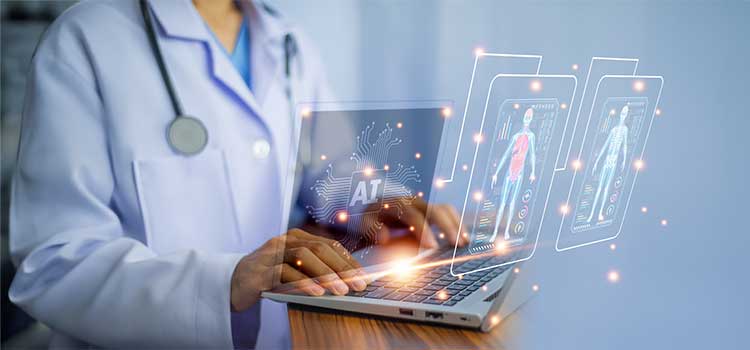

Nursing as a field is evolving quickly, with artificial intelligence (AI) and robotics playing a major role in shaping the future of the field. For prospective and continuing nursing students, understanding these advancements may help you gain an advantage over your competitors in the job market. More than that, keeping up with advancements that are happening now may help you shape the future and add your voice to the nursing profession at large.
Technology is enhancing education, streamlining clinical practice and transforming patient care in ways that will define the next generation of healthcare professionals. For nursing students, AI-powered learning platforms are creating custom study plans, improving critical thinking skills and preparing students for real-world decision-making. In the field, robotic-assisted technology is helping nurses deliver medications, monitor patients and even assist in surgeries.

For nursing students, AI-powered learning platforms are creating custom study plans, improving critical thinking skills and preparing students for real-world decision-making.
But how do we separate the hype and conjecture from what’s really going on today—especially if you’re still finishing your studies and preparing to enter the workforce as a nursing graduate? That’s the question we’re answering here by taking a look at how AI and robotics are being used in nursing education, where this technology is heading and how you can develop future-facing skills to stay on top of the rapidly changing healthcare field.
How AI is revolutionizing nursing education
When most of us think of AI, things like large language model chatbots, robotics or medical technology come to mind: robot-assisted surgeries, for instance, or biopsy analysis—maybe records management. But AI is becoming more common in the classroom, too, and if you’re a nursing student, you have probably seen this firsthand. More and more, universities are incorporating advancements in technology directly into the curriculum.
Amy M. Hall, PhD, RN, CNE, Professor & Dean School of Nursing at Franciscan Missionaries of Our Lady University, says that Sherpath AI, a conversational AI tool that helps students and faculty achieve more, has become a core tool for students and faculty. “Our faculty uses Sherpath AI to prepare lesson plans and create active learning experiences for class,” she said. “One 45-minute lesson plan alone can easily take two hours to create from scratch. This tool helps faculty organize and locate information and automate some of the more repetitive and time-consuming aspects of teaching, leaving more time for what’s most important—our students.”
“With SherpathAI,” she continued, “nursing students can ask questions with natural language in the same way they would speak to a peer or professor. Students and faculty both like that they can ask questions in the chat. The tool provides the information quickly and cites the sources of the answer given, which allows them to go back and review information and seek further information when needed.”
Students and teachers agree that artificial intelligence is changing the way nursing students learn, making education more personalized and interactive and better aligned with real-world clinical challenges. Instead of a traditional one-size-fits-all approach, AI-driven tools can be used to tailor learning experiences, bridge the gap between theory and practice and equip students with the technological skills they’ll need in a rapidly evolving healthcare landscape.
From adaptive study plans to immersive simulations and AI-integrated curriculum, some of the most prevalent ways AI is transforming nursing education include:
Personalized, adaptive learning
Artificial intelligence is revolutionizing nursing education by introducing innovative learning methods such as AI-powered platforms to enhance learning and better prepare students for clinical practice. These learning hubs have the ability to customize educational experiences in a way that meets individual students right where they’re at, adapting content delivery based on learning styles and progress. For instance, an auditory learner might receive verbal explanations, while a visual learner is presented with infographics. This tailored approach enhances material retention and comprehension.
This adaptive learning technology reflects an issue that you may have struggled with firsthand—how to translate academic learning with hands-on practice. The Next Generation National Council Licensure Examination (NCLEX®) is using artificial intelligence to increase student focus on clinical preparedness. One statistic shows that the number of practice-ready students has declined from 23% to 9% during the most recent four-year analysis. Educators need a reliable method to measure whether their students have the critical knowledge they’ll need to care for patients safely and independently, and AI is helping them do just that.
Brent Gordon, President of Nursing and Health Education at Elsevier, stated how he sees AI being used in nursing education today and how the technology he uses—also Sherpath AI—is shaping education.
“Sherpath AI personalizes the learning journey for each student,” said Gordon, “adapting in real time to their strengths and areas for improvement. Unlike traditional, one-size-fits-all methods, Sherpath AI delivers tailored responses and video tutorials to accelerate learning from Elsevier’s evidenced-based content, ensuring students focus on what they need most. It also provides instant feedback 24/7, helping learners build confidence and competence more efficiently. By integrating AI-driven insights, nursing students can engage with complex concepts in a way that mirrors real-world clinical decision-making.”
Bridging the gap between classroom and clinic
Paul Crockett, Senior Vice President of Product and Enterprise Solutions at Elsevier, an innovative tools and data-driven insights company for healthcare clinicians, patients, policymakers and educators, sees AI addressing barriers to learning, enhancing retention and delivering a better hands-on approach to learning.
It’s no secret,” said Crockett, “that U.S. nursing schools are facing a critical shortage of faculty, and that those shortages and strained resources in medical education are one of the leading issues contributing to the growing U.S. nursing shortage. Recruiting, training and retaining nurses is crucial to the success of our nation’s healthcare system, and many nursing schools are taking a hard look at how to drive nurse education capacity and boost effectiveness in the face of resource constraints. Sherpath AI is a scalable solution that can assist nursing schools struggling with staffing and resource shortages that impede their ability to accept more students.”
Dena Lam, MSN candidate at Arizona State University, confirmed that AI is absolutely helpful to her studies. “As a student in an accelerated Master of Science in Nursing program, there is an overwhelming amount of information and content for me to absorb in a short period of time. Sherpath AI not only helps me consume all that information but also allows me to get precise answers to my questions in a matter of moments.”
Virtual reality (VR) simulations, driven by AI, are another example of how nursing students are using advances in tech to provide more immersive learning. Simulations and detailed models allow nursing students to practice clinical scenarios that deepen their understanding of complex topics without any risk to patients. These simulations replicate real-world healthcare settings, allowing students to engage in hands-on procedures such as patient assessments, medication administration and responding to emergency situations in a controlled, repeatable manner.
Even better, these simulations offer dynamic learning experiences that adapt to students’ actions, providing immediate feedback and personalized guidance to reinforce clinical reasoning skills. Through their interactions with AI-powered virtual patients, students can build confidence, improve decision-making and refine their bedside manner before entering real clinical environments.
Preparing for an AI-enabled workplace
Working AI into nursing curriculum ensures that future nurses are proficient in technologies that could soon dominate modern healthcare settings. AI and robotics are revolutionizing healthcare by enhancing diagnostics, personalizing treatments and improving efficiency. Nurses who don’t keep pace with these changes could be hurting their chances of landing the job they love after earning their degree.
The technology that students will need to learn may be specific to their specialty. Nurses who work at hospitals may need training in emergency medicine, which may include diagnostic robots or AI that streamlines electronic health records. Nurses who work at a family practice, on the other hand, may need to be familiar with tech like clinical decision support systems or clinical note taking software.
AI technology may simplify workflows or reduce administrative burdens so clinicians can focus on patient care. It may also provide predictive analytics to help identify at-risk patients earlier, improving patient outcomes. Robotics will advance surgical precision, automate routine tasks and support rehabilitation and elder care. There are new and exciting advancements made every day, and nursing students will need to consider what kind of tech they can and should be learning about to prepare for future-facing careers.
Because of the imminent changes, many educational institutions are adding AI-focused courses to equip students with the skills they’ll need to deliver the best possible care. This shift in education only intensifies the growing importance of AI literacy in nursing education.
The role of robotics in nursing practice
There’s no question that AI-driven automation is going to become more prevalent in nursing and healthcare. It alleviates pressure on healthcare teams in every industry, saves time and makes it easier to deliver care quickly. However, technology must be a complement to, and not a replacement for, the human element in care. There is no substitute for a real caregiver with skills, knowledge and a compassionate demeanor. The future lies in a balanced collaboration between AI, robotics and skilled professionals to create a more efficient, patient-centered healthcare system.
Enhancing patient care
You may have already heard about or even used some of the most common applications for AI technology in nursing: EHRs, scheduling software or note-taking apps streamline check-ins, discharges, continuing care and more. From medication management to duties normally left to entry-level medical assistants, there are many ways that AI has found a foothold.
As time goes on, patient-facing technology will play a greater and greater role in healthcare. AI-assisted robots, are already assisting nurses with tasks such as medication delivery, patient mobility and monitoring vital signs in Japan. There, researchers have developed an AI-driven humanoid robot named AIREC who is capable of performing tasks such as repositioning patients, cooking and laundry and addressing the country’s shortage of aged-care workers.
There are companion robots, too, like Paro, a therapeutic baby harp seal robot. These are being used in hospitals and nursing homes to provide emotional support and improve the well-being of patients, particularly those with dementia. Autonomous robots are being used to perform maintenance or inventory management. Diagnostic robots assist doctors with medical imaging analysis and diagnosis. Delivery robots transport medications, supplies and specimens within hospitals and healthcare facilities.
Nurses must lead the way in this partnership with technology, embracing its strengths and becoming well-versed in its limitations. Whether it’s robots or AI-enhanced software, no one will come into direct contact with these technologies more than nurses.
Surgical precision and workforce support
Crockett agreed that AI and robotics are revolutionizing healthcare in many different ways. “AI streamlines workflows,” he explained, “reducing administrative burdens so clinicians can focus on patient care. Predictive analytics can help too, identifying at-risk patients earlier and improving outcomes.”
Perhaps nowhere is the risk and reward of AI and robotic integration into healthcare more exciting than in direct patient care. “Robotics are advancing surgical precision,” said Crockett, “and automating routine tasks. AI-driven automation is important because it alleviates pressure on healthcare teams. The future of healthcare is going to really be a balanced collaboration between AI, robotics and skilled professionals that will ultimately create a more efficient, patient-centered healthcare system.”
Robots are also being developed to support the healthcare workforce by taking on routine tasks, allowing nurses to focus more on direct patient care. In Scotland, the National Robotarium trialed the ARI robot to assist patients with rehabilitation exercises, addressing the shortage of physiotherapists. The robot provided verbal instructions and demonstrated exercises, enhancing the efficiency of patient care.
Advancements such as these in robotics are reshaping nursing practice by offering innovative solutions to improve patient care and much-needed support to healthcare professionals.
The future of nursing in an AI-driven world
The integration of AI and robotics into healthcare is leading to a hybrid workforce—one where technology supports human professionals. This has led to speculation about how AI might replace human workers in nearly every industry. It’s important to be a part of the discussion about what artificial intelligence should and should not be, however, nursing is one industry where human beings will always prefer the care, compassion and connection that other humans provide.
So what will AI’s role be? It may consist of handling administrative parts of a nurse’s daily routine. A nurse’s ability to collect samples or perform exams makes their time valuable, for instance, but much of their day may be taken up by doing paperwork. This is a prime example of where AI can help.
AI-powered tools may assist with administrative tasks such as data analysis and routine procedures, allowing nurses to focus more on direct patient care. As an example, AI assistants such as Microsoft Dragon Copilot can automate note-taking and clinical documentation, reducing the administrative burden on workers. Germ-eradicating robots are being used to thoroughly sanitize hospitals, too, which keeps the number of hospital-acquired infections to a minimum without putting a strain on direct patient care.
In some rare cases, robots may be selected to perform or directly assist in high-stakes patient care. The da Vinci Surgical System is a complex, multi-armed robot is designed to help orchestrate a surgery and also guide or steady a surgeon’s hands as he or she conducts an operation. It can perform cardiac, urologic, gynecologic, pediatric and general surgery. In fact, approximately three out of four prostate cancer surgeries in the U.S. today are performed using the da Vinci Surgery robot.
As time goes on, more and more of the healthcare workforce will become populated with new and exciting tools to support patient care. It’s important to remember that, ultimately, the goal of human and artificial intelligence is the same: to provide critical care to people who need it the most.
Continuous learning and professional development
As AI technologies evolve, mandatory continuous learning will become even more essential for nursing professionals. Healthcare workers must stay updated on new tools and protocols to effectively integrate AI into their practice. Educational initiatives, such as the Sustainable Healthcare with Digital Health Data Competence (SUSA) project, aim to enhance the digital skills of health professionals through specialized programs.
Lam knows firsthand how important it will be to keep up with healthcare tech. She said that AI can and already has made her a better nurse. She recalls a specific example of how Sherpath AI helped her to understand complex concepts while she was studying for a pharmacology exam. “I was focusing on furosemide, a diuretic commonly used to reduce excess fluid in patients, especially those with heart failure. Sherpath AI helped me not only understand the drug’s mechanism of action but also its side effects, interactions and how it affects patients.”
“Sherpath AI prepared me to perform well on my exam, where I scored 97%,” Lam continued. “I was able to apply this knowledge during my cardiovascular intensive care unit clinical. My preceptor asked about the medications my patient was taking that could cause potassium loss. Thanks again to Sherpath AI, I quickly recognized furosemide on the patient’s medication list and made the connection between it and its potential to cause hypokalemia. Being able to recall that information on the spot was valuable in delivering safe and informed patient care.” Experience working with AI or robotics will make you a more valuable caregiver and by becoming literate in these skills early on could help your ability to advance in your field and grow as a professional.
Shaping the future of AI in nursing
A nurse’s firsthand experience with patient care provides valuable insights into how AI can be utilized effectively and compassionately. By actively engaging in these collaborations, nurses can help shape a future where AI serves as a valuable ally in delivering efficient yet effective care.
Crockett said that in his company, they “consider the real-world impact of our solutions on people,” adding, “We take action to prevent the creation or reinforcement of unfair bias. We can explain how our solutions work. We create accountability through human oversight. We respect privacy and champion robust data governance.”
But educators like Hall said they aren’t concerned with the integrity of AI tech such as that which Crockett’s company develops, and that students and educators are instructed to vet it vigilantly. “Because Sherpath AI pulls information directly from Elsevier’s trusted database we feel comfortable with our students and faculty using the tool—and our students are showing that they are comfortable using AI in their learning.”
“The quality of the information and the fact that it is consistent with and supported by the students’ textbooks is really allaying fears. We also see this as an opportunity for faculty to demonstrate to their students how to use AI as a professional nurse and to use reliable information to make sound clinical judgments when caring for patients.”
In integrating with AI, nurses will be at the forefront of assessing robotics in the field. “Misinformation and hallucinations in AI tools are a significant concern in healthcare,” Crockett said, and not just in the healthcare industry. “Human oversight will always be critical to creating more positive patient outcomes, and robotic record-keeping and diagnostics should serve as a second set of eyes to confirm or object to a diagnosis, increasing positive outcomes for patient care.”
Final thoughts
The integration of AI and robotics into nursing will continue to offer nurses and nursing students opportunities and challenges. For nursing students, embracing these technological advancements is crucial. AI is enhancing nursing education through personalized learning and immersive simulations, while robotics is transforming patient care with precision and efficiency.
But the irreplaceable nature of human interaction remains core and central to nursing, underscoring the importance of empathy and ethical considerations. Developing AI literacy, engaging in continuous learning and actively participating in the evolution of healthcare technologies will ensure that current and future nurses are prepared to deliver their usual compassionate, high-quality care in an AI-augmented world.