
Nurse Midwife Career and Degree Guide
Related Reading

By: Malia Jacobson
Thinking of a career as a nurse midwife? See if it’s right for you.
Certified nurse midwives (CNMs) are highly trained, versatile healthcare professionals who provide vital medical care and guide patients through important life transitions. In addition to caring for expectant mothers from pregnancy through the postpartum period, nurse midwives treat women throughout their lives as primary care providers.
In This Article
What Is a Nurse Midwife? | What They Do | Nurse Midwives vs. Other Caregivers | Salaries | Becoming a Nurse Midwife | Financial Aid | Certification | Continuing Education | Career Paths | Workplaces | Job Growth and Career Outlook
Certified nurse midwives serve as essential members of healthcare teams and, in some cases, operate independent practices. Like other roles in advanced practice nursing, midwifery is experiencing strong growth. According to the U.S. Bureau of Labor Statistics (BLS), CNM jobs are projected to grow 11.1% through 2034, faster than average.
Demand for nurse midwifery services has increased steadily since 2005, according to the American College of Nurse-Midwives. The most recent data from the National Center for Health Statistics (NCHS) shows that in 2020, CNMs attended 372,991 of U.S. births and over 10.2% of all births.
According to the Bureau of Labor Statistics, CNM jobs are projected to grow 11.1% through 2034, faster than average.
If you’re interested in this growing career path, learn more about the education you’ll need, the work you’ll do, and how you can advance your career.
What Is a Certified Nurse Midwife?
Certified nurse midwives are a type of advanced practice registered nurse (APRN). They practice in hospitals, birthing centers, and private practices, caring for women through pregnancy and beyond. Along with training as registered nurses, CNMs have also earned a Master of Science in Nursing (MSN) with a specialization in midwifery.
Four Steps to Becoming a Certified Nurse Midwife
There are several ways to become a CNM, but they all include these steps:
1
Complete an MSN program
2
Pass the national midwifery certification exam
3
Apply for advanced practice state licensure as a certified midwife
4
Maintain certification and licensing through continuing education
A certified nurse midwife’s education sets them apart from other midwives, many of whom aren’t registered nurses. Because of their graduate degree and training, nurse midwives are:
What Nurse Midwives Do
You’ll take on a wide range of responsibilities as a nurse midwife. What you do often depends on where you work. For example, if you have a private practice, you might take on more duties than you would working at a large hospital. In general, CNMs:

A Midwife–and More
Many certified nurse midwives also serve as primary care providers for women, providing reproductive and general healthcare services.
Certified Nurse Midwives Versus Other Childbirth Specialists
Because of their education, certified nurse midwives have much more responsibility and autonomy than other midwives and professionals who help women during and following pregnancy. Only physicians have more. Here are some important distinctions between CNMs and other childbirth professionals and the services they provide.
Profession
Role
Obstetrician-Gynecologist
(OB-GYN)
OB-GYNs are medical doctors who specialize in obstetrics and gynecology and care for women from pregnancy through delivery. They handle normal pregnancies plus high-risk ones in which the mother has a health concern that may complicate birth. They also induce labor and perform C-sections.
Certified Nurse Midwife
(CNM)
CNMs are registered nurses who attend births in hospitals and birthing centers. With a master’s degree with a specialty in nurse midwifery, they are considered primary care providers, which means they can do many of the same things as physicians, including prescribing medicine.
Certified Midwife
(CM)
Certified midwives have an undergraduate degree outside of nursing but a graduate degree in midwifery. They aren’t required to be licensed as RNs. They have the same authority and scope of practice as CNMs, but only six states recognize the CM credential.
Registered Midwives (RMs) and
Licensed Midwives (LMs)
RMs and LMs complete training or a college program outside nursing. They primarily attend births at home.
Certified Professional Midwife
(CPM)
CPMs can complete an apprenticeship or attend a midwifery school. They care for women who plan to give birth at home.
Doula
Doulas are childbirth support professionals who have completed a certification program. They focus on the emotional and physical needs of women during labor and work to create a calming environment. They don’t provide medical care.
Childbirth Educator
Childbirth educators lead classes in hospitals, birthing centers, and community facilities. They aren’t present during childbirth.
Labor and Delivery Nurse
As RNs, labor and delivery nurses assist physicians or certified nurse midwives during delivery and help new moms with their first breastfeeding.
There are many other specialists whom parents might use before, during, or after childbirth. Like childbirth educators, these professionals aren’t part of the delivery process, but they can help parents in other ways. They include lactation support specialists, postpartum physical therapists, prenatal fitness instructors, and new-parent counselors.
CNM Salaries
Working as a certified nurse midwife can be a lucrative career. According to the BLS, the median annual CNM salary is $128,790. As a comparison, this number is well above the BLS’s reported median salary of $93,600 for registered nurses.
How to Become a Certified Nurse Midwife
To become a CNM, you’ll need to meet certain requirements before enrolling in a master’s degree program. These often include:
School Accreditation for Nurse Midwife Programs
When researching schools and programs, make sure they are accredited. This is crucial, because graduates of non-accredited nurse midwife programs aren’t eligible to take the CNM certification exam. According to the Accreditation Commission for Midwifery Education (ACME), accreditation ensures that “programs are performing at the highest level of quality and providing learning experiences that will lead to optimal outcomes for students.”
You must attend an accredited school and midwife program to be eligible to take the CNM certification exam.
Education Options
Depending on your level of education, there are a few paths you can take to earning an MSN with a specialty in midwifery.
Depending on your program and the level of education you start with, earning your MSN in nurse midwifery can take two to four years.
Online Programs
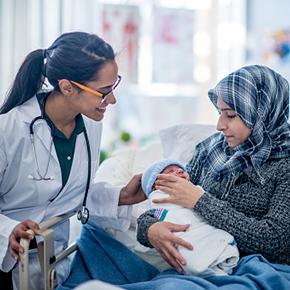
Online, campus-based, and hybrid MSN programs are available throughout the country. These programs are often designed with working nurses in mind, and students can take classes on a full- or part-time basis.
Expect flexibility, with courses many times scheduled at night and on weekends, allowing busy students to balance family and work responsibilities. However, note that whichever program you choose, you should expect to spend considerable time in hands-on clinical training in a medical setting.
Financial Aid
Financial aid is available from a variety of sources, most commonly the government. You’ll need to fill out the Free Application for Federal Student Aid (FAFSA) to be considered. Other types of financial aid include scholarships, grants, and private loans.
Certification
Once you complete your degree, your next step will be to seek certification in this specialty by taking the American Midwifery Certification Board (AMCB) exam. Passing this exam qualifies you to practice as a certified nurse midwife.
The AMCB test consists of 175 questions administered on a computer. You’ll have four tries to pass the exam, and you’ll need to pass it within 24 months of completing your master’s program. Candidates who do not pass on their fourth attempt within 24 months must complete another accredited nurse midwife degree program before repeating the exam.
Continuing Education
You’ll be required to take continuing education classes throughout your career to keep up with changes, advances, and trends in midwifery. The American College of Nurse Midwives offers many continuing education classes that are approved by state boards of nursing. Since each state differs, consult your nursing board to find out how many credits you’ll need to fulfill and how often.
Career Paths
Certified nurse midwives can pursue careers inside and outside of clinical settings. Those interested in working outside hospitals and birth centers may be able to transition to administrative and public policy roles. For example, if you’re passionate about safety during labor, you might be able to use your role as a CNM to advocate for health initiatives that will improve patients’ lives.
Workplaces
Certified nurse midwives might work in a variety of locations throughout their career. Some common employers include:
Some CNMs also work in private practice, sometimes offering home birth deliveries to their patients. Employment options will depend on where you live and your years of experience.
Job Growth & Career Outlook
A nationwide shortage of maternity care providers is fueling increased demand for certified nurse midwives across the U.S. The BLS predicts job opportunities for nurse midwives will grow 11.1% through 2034, just above the average for all other jobs.
For nurse midwives who want to move into leadership or management, earning a Doctor of Nursing Practice (DNP) could pay off. A DNP is the highest educational level within the field of nurse midwifery and can help qualify midwives to teach at the university level and assume leadership or managerial roles.
And because of the high need for women’s healthcare worldwide, nurse midwives with a DNP could step into positions to help improve maternal and newborn health globally.